HistoryArticles.Com
Since 1965 - award-winning features about the overlooked people, places, and events of modern history
CHICAGO TRIBUNE MARCH 24, 2013
CHICAGO'S ARSENAL OF DEMOCRACY
LED BY DODGE-CHICAGO AND ITS B-29 ENGINE PRODUCTION
CHICAGO INDUSTRIES POWERED THE WAY TO VICTORY IN WORLD WAR TWO
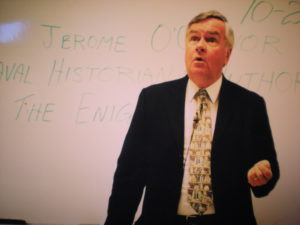
BY JEROME M. O'CONNOR
SPECIAL TO THE TRIBUNE
BELOW (L) DODGE-CHICAGO 1943 AERIAL VIEW (C) FIVE ENGINES BUILT FOR EVERY B-29 (R) 2013 VIEW OF B-29 ENGINE TEST STACKS
RARE THEN AND NOW PHOTOS AT END OF ARTICLE
When told about the Japanese attack at Pearl Harbor, British Prime Minister Winston Churchill envisioned what would come; "Now at this moment I knew that the United States was in the war, up to the neck and in to the death. So we have won after all !" Britain's wartime leader knew that America's immense manufacturing potential would lead the world to salvation. The sleeping giant had awakened.
So began one of the most remarkable mobilizations in history as thousands of businesses converted from peace to war manufacturing. Huge new factories were built in months; tens of thousands of workers were recruited, hired and trained even as hundreds of homes were built to house them. And that was just in the Chicago area. Chicago's large labor pool, expansive rail network and central location - insulated from the threat of enemy bombers - made it an ideal location for such war production.
The War Production Board, a federal agency with broad powers, ordered hundreds of Chicago manufacturers to immediately convert, expand, devise and improvise. That led to sometimes jarring changeovers. Radio Flyer ended production of its famous little red wagon at the Grand Avenue factory and switched to blitz cans or fuel containers. Cracker Jack changed to powdered coffee and other GI rations. Chicago Roller Skate Co. retooled to make parts for shells and guns. A manufacturing marathon began at more that 1,400 Chicago-area factories, putting muscle and brains behind nearly every eapect of the war effort, and for the first time hiring thousands of women, sometimes more than 50 percent of a plant's workforce.
G.D Searle, Baxter and Abbott Laboratories collaborated to mass produce penicillin, the war's wonder drug. Scores of companies, including Galvin Manufacturing (the precursor to Motorola), Hallicrafters and Webcor, made half of the war's electronic equipment. In Forest Park, about 10,000 Amertorp technicians assembled 5,000 complex parts for 19,000 torpedoes. The region's steel mills, including Inland Steel and Republic Steel churned out millions of tons of steel for armor plating. But possibly the most impressive feat, after the creation nearly from scratch of an entire industry, was the production of engines and aircraft at four massive Chicago plants. All told, the region's industrial might was critical to the Allied victory.
From a million - square foot plant at Archer and Cicero avenues near what was then called Chicago Municipal Airport, Studebaker assembled parts for the B-17 Wright Cyclone engine. Buick's 125 - acre factory on North Avenue in Melrose Park made nearly 75,000 Pratt & Whitney engines for the B-24 Liberator bomber. In the prairies of unincorporated Cook County at Orchard Place (the source of O'Hare International Airport's ORD designator), Douglas Aircraft assembled 655 C-54 transport planes in a 2 million- square foot plant - the largest timber building ever made. But it was the 6.3 million-square foot, 19-building, Dodge -Chicago works - "the largest airplane engine factory in the world" - and its B-29 engine production that led all Chicago war production.
On December 15, 1944, the Tribune noted the shipment to Boeing of the 5,000th Dodge-Chicago B-29 engine: "The plant was turning out at least 90 percent of the engines for the Super Fortress." Even that record, achieved in only 11 months, was shattered three months later on March 24, 1945, when another 5,000 engines had been completed. "The big job now is for the 32,000 employees at the plant, of whom more than 99 percent are Chicago people, to maintain the peak rate of production," declated a Chrysler executive, adding that only a little more than 2 1/2 years before the Didge-Chicago plant was only a set of blueprints.
The $458 million facility extended from 71 to 77th Street and from Cicero to Pulaski Road. Inside the 82-acre assembly building, base metals from foundries and forges emerged as fully tested, 18-cylinder, 2,200 horsepower radial engines with 6,000 precision parts, then shipped by rail to a Boeing, Bell, or Martin final assembly plant.
Classroom instruction at the site converted unskilled workers into precision crafters to operate 9,300 metal fabrication machines. Fifteen cafeterias fed 35,000 daily, while seven massive coal-fired boilers produced enough energy for a city of 300,000. By the war's end, the Dodge-Chicago plant had turned out more than 18,000 engines, nearly five engines for every four-engine B-29 that ever flew.
These massive new factories transformed the neighboring areas. Thousands of workers and their families settled near the plants, buying hundreds of hastily built "war homes" that sold for $6,000 or less or rented for $40-$50 per month. Large tracts took shape across a wide area, especially from Des Plaines south to Melrose Park, Bellwood, La Grange, Westchester, Western Springs, Forest Park and Summitt. Chrysler Village was built for and named after the Dodge plant, which also spurred growth in the sparsley populated area near the fututre Midway Airport. The neighborhoods would become closely knit as most of the residents, men and women, worked the same nine-hour days and six-day weeks. In Park Ridge, scores of two-story Georgian-style homes were built to house officers training to fly the C-54 transports being assembled in the Douglas plant.
The war effort also transformed the workplace by bringing thousands of women onto factory floors and assembly lines. Recognizing the magnitude of that change, the Tribune started a new regular feature in January 1942 called "Women in War Work," which chronicled the momentous change in the American workplace. But as quick as the mobilization was, the end may have been quicker as the factories closed or returned to civilian use, with the Dodge-Chicago works becoming the city's biggest white elephant. In 1947, as Dodge-Chicago echoed with abandonment, automobile innovator Preston Tucker leased half of the assembly building for production of his futuristic 'Tucker 48,' but manufacturing setbacks, dealer lawsuits, and government prosecution never got the torpedo shaped auto out of first gear. The factory closed after making only 51 cars. Given new life during the Korean War and using much of the same equipment that made the B-29 engines, Ford Motor Co. produced piston and jet engines for the military until 1959 when the factory again closed. What would become Ford City began in 1961 when developer Harry Chadwick bought the entire property and opened the shopping mall in 1965.
Frank Werner began working at Ford City as a Bogan High School sophomore in 1972, and as the shopping center's chief engineer 41 years later is also custodian of its wartime fame as Dodge-Chicago. "The same tunnels that connected parts of the building are used every day as passageways for shoppers and by Carson-Pirie-Scott for part of its retail store. Even the electrical vaults, switch gear, 12,000 volt cables and transformers are original. In case of an air raid, the 18 inch thick concrete roof was given a mesh interlayer to prevent up to 1,000 pound bombs from exploding on the production floor."
A curious coda links the wartime Dodge-Chicago saga to the present. In 1967, famously secretive Tootsie Roll Industries began production in a 2 million square-foot section of the former assembly building. Decades later, surrounded by the same concrete exhaust stacks that once tested the mighty engines, the candy factory has an unexpected exhibit alongside confectionery samples given to rare visitors - a fully assembled B-29 engine made in the same building. The Wright Cyclone engine once powered "FIFI," the last operational B-29 of 3,970 of the legendary bombers made for the single purpose of bringing the war directly to Japan. In 2011, "FIFI" flew dozens of awed visitors on demonstration flights at the DuPage County Air Show.
There was every hope these huge new aircraft enterprises would become permanent industries in Chicago. On January 4, 1943, the Tribune reported: "Well-informed Chicagoans predict that this city at last is well on its way to becoming the nations's aviation manufacturing center." While that prediction proved untrue, it is hard to argue that Chicago wasn't the heart of America's Arsenal of Democracy.
_________________________________________________________________________________________________
PHOTO GALLERY INSIDE AND OUT - THE SAME WAR PLANTS THEN AND NOW
2013 - B-29 ENGINE IN INSIDE THE 6.3 MILLION ACRE DODGE PLANT ARCHED-ROOF CONCRETE CONSTRUCTION OF
TOOTSIE ROLL FACTORY NOW FORD CITY MALL IN CHICAGO 82-ACRE ASSEMBLY BUILDING BY ALFRED KAHN

ASSEMBLING THE B-29 ENGINE 1944 CHRYSLER PHOTO B-29 TEST CELLS 2013 FORMER TEST CELLS NOW TOOTSIE ROLL
2013-FORMER BUICK B-24 ENGINE PLANT ADJACENT ABANDONED TRACKS ONCE STILL VISIBLE IN 2013 - BUICK - CHICAGO
NOW MAKES NAVISTAR ENGINES TRANSPORTED ENGINES FOR ASSEMBLY AIR RAID REPORTING STATION

1944 MAIN ENTRANCE BUICK-CHICAGO & 125-ACRE AERIAL VIEW 1944. NORTH AVE AT BOTTOM TESTING B-24 SPARKPLUGS IN 1944
ADDITIONAL THEN AND NOW IMAGES ADDED PERIODICALLY
(LAST ADDITIONS APRIL 14, 2013. BOOKMARK FOR MORE RARE IMAGES OF THE SAME PLANTS THEN AND NOW)
MORE PREVIOUSLY PUBLISHED FEATURES IN THE DECADES-LONG SERIES CONTINUE BELOW

MOTOR ROW MEMORIES
FROM 1903 SCORES OF DAZZLING AUTO SHOWROOMS GAVE THE YOUNG INDUSTRY A GAME CHANGING JUMP-START
THE ONLY PLACE IN CHICAGO TO BUY THE AUTOS THAT TRANSFORMED CHICAGO AND AMERICA
DOZENS OF THE ORIGINAL SOUTH MICHIGAN AVENUE BUILDINGS REMAIN
DESTINED TO BE CHICAGO'S NEXT MAJOR ENTERTAINMENT DISTRICT
BY JEROME M. O'CONNOR, CHICAGO SUNDAY TRIBUNE, OCTOBER 21, 2012
(L-R) FORMER CENTRAL STATION, FORMER HUDSON, PEERLESS, PREMIER & BUICK SHOWROOMS 2012)
When Henry Ford arrived by train in Chicago's Central Station in 1905, he was just steps from the South Michigan Avenue site that would be his first store outside Detroit. His new plan to sell automobiles from bright showrooms would change Chicago and America - and transform a quiet city neighborhood into the largest and most glamorous concentration of auto dealerships in the country.
Chicago's historic Motor Row on South Michigan Avenue is back in the news with developers' plans to rejuvenate the area as an entertainment and restaurant zone near the
McCormick Place convention center. The effort is just the latest attempt to return the area to a semblance of its former glory. In 2001 the city established a Motor Row Landmark
District that included 55 buildings in recognition of its importance.
At the turn of the last century, with the battle between the reliable horse and the undependable carriage still in doubt, Ford picked a promising location for his risky business expansion. Close to Prairie Avenue's new wealth, it was on one of Chicago's first fully paved streets, flat as a billiard table and ideal for test drives.
While he wasn't the first on Motor Row - that distinction goes to the Winton Motor Carriage Co. in 1903 - Ford would prove to be the magnet that attracted 116 dealers selling 123 models, including coupes, tonneaus, phaetons and roadsters, behind wide-windowed storefronts with 180-foot-deep bays for easy car access.

THE ONE-TIME FORD AGENCY 2012 AND 1905 COLISEUM & 1st REGIMENT ARMORY CIRCA 1910 - LOCATIONS FOR FIRST CHICAGO AUTO SHOWS
From 12th Street (later renamed Roosevelt Road) to 31st Street and on adjacent Indiana and Wabash avenues, repair garages, accessory dealers and parts suppliers built scores more stores. A frantic rush to buy began and only South Michigan Avenue could fill the need.
Anticipating the historic change, the Studebaker brothers quickly phased out their soon-to-be obsolete carriages and wagons from five floors of showrooms at 410 S. Michigan to sell cars farther south at 2036 S. Michigan.
Chicago's auto registrations soared from 300 issued in 1900 to 90,000 in 1920 to an astonishing 300,000 in 1925, according to a 2001 landmarks commission report. Horses went to pastures as new bungalows now included garages instead of barns. Starting in 1913 with the Lincoln Highway, numerous national roads were constructed in the following years, including the Dixie Highway in Illinois.
The cars entering Motor Row's flourishing dealerships had a short stay - in on Monday, showroom on Tuesday, sold on Wednesday. Nationwide, at least 2,800 carmakers sporting marques from Ace and Acme to Zent and Zimmerman, some swapping scythes and buckboards for axles and engines, got on board.
In 1906, John J. Glessner, one of the wealthiest men in the city and a founder of International Harvester, bought a glossy Pierce Arrow Victoria Tonneau from the H. Paulman agency at 1321 S. Michigan, the first of many cars, and modified the coach house of his Prairie Avenue mansion (below circa 1905 and 2012) into a garage.
The Tribune in 1909 was along for the ride, marveling at how far Motor Row had come and pointing out that at least 15 new makes had been added in just the last 18 months. In a special section for the annual Chicago Automobile Show, the Tribune crowed, "Chicago has the most imposing automobile row of any city in the country, and claim for a world's record wight well be made without much chance of there being any dispute."
With the Coliseum only steps from Motor Row, the auto show had been gaining traction since 1901. In 1911, it expanded to twice yearly and spilled over into the adjacent First Regiment Armory.
Motor Row pulled out all the stops for that first fall auto show. A seven-column broadside read, "Big Parade Finds 'Motor Row' in a Blaze of Electric Radiance," and reported breathlessly of the "fortune spent in lighting up the street" and how the showrooms would be opened in the evenings for the first time.
Being shown that fall at the Coliseum, self-starters, in use for several years, were becoming standard in more models. "This self-starting idea," the Tribune said, is certain to make gasoline cars even more popular for it will attract women drivers who hertofore have held aloof vecause of the difficulty of starting a motor, particularly in cold weather."
Another feature becoming standard? Spare tires, or as they were known then, "demountables."
Increased Tribune display advertising reflected surging interest in the new industry. In October 1911, Stevens-Duryea advertised a limousine with "a four-cylinder power air pump to inflate tires, coat and robe rail, water and toilet bottles, speaking tube, glove tray with mirror, flower case, electric cigar lighter and umbrella holder."
Very quickly, the modest salesrooms were replaced by multistory, terra-cotta temples mimicking the wildly popular Loop movie palaces, their fluted columns and capitals reminiscent of ancient empires. The Spanish Revival Hudson showroom at 2222 S. Michigan shared equal opulence with the adjoining Marmon dealership, both designed by Alfred Alshuler, known for the London Guarantee Building (now Crain Communications) at Wacker Drive and Michigan.
1911-2012 CADILLAC SHOWROOM & 1911 AD 1909-2012 MAXWELL-BRISCOE SHOWROOM 1922-2012 MARMON SHOWROOM & ORIGINAL SALES FLOOR
In 1936, Motor Row's last spectacle, the Spanish Mission-style, Philip Maher designed Illinois Automobile Club opened with an extravagent brochure promising, the Tribune said, "life membership" and "a 21 story clubhouse complete with swimming pool, dance halls and athletic facilities." Only the foundation and a partial swimming pool were finished, to be later used by the Chicago Defender for its presses. That year, one of the worst in the Great Depression, the entire district, drowning in debt and running on empty, neared collapse.
Feeling the full impact of the Depression, Stutz, Pierce-Arrow, Auburn-Cord, Marmon, Packard and other luxury brands either left or folded. Most of the others followed, hastened by a neighborhood already in decline. The elite had already abandoned Prairie Avenue for Astor Street, and dealers now featured larger indoor showrooms with big outdoor lots closer to customers on Ashland, Western and Cicero avenues and at other city and suburban locations. Finally, World War II stopped civilian car production, ending Motor Row's long prominence.
The cars and the customers of America's most intact early auto sales district are gone, but not the vestiges of their young industry. The medallions above the wide windows still show Pierce, Peerless, Buick, Hudson, Locomobile and Marmon. From Roosevelt to Cermak roads, dozens of boarded-up-buildings line Michigan in the landmark district, silent testimony to long-forgotten car brands and the hulking vehicles that braved Chicago's rutted roads a century ago.
As for Ford's showroom - an investment made with only $243 remaining in his bank account - the repurposed original building still stands at 1444 S. Michigan as witness to Motor Row's past and future.
____________________
O'Connor's 1978 Tribune Sunday Magazine feature revealed the Churchill Cabinet War Rooms in London. In 2001 he was named the U.S. Naval Institute "Author of the Year."
______________________________________________________________________________________________________________
OTHER FEATURES BELOW INCLUDE THE U.S. NAVAL INSTITUTE 'AUTHOR OF THE YEAR' ARTICLE
TRENT PARK TATTLETALES
THE UNKNOWN LONDON LOCATION WHERE NAZI GENERALS TALKED OPENLY TO EACH OTHER AND SECRETLY TO BRITISH EAVSDROPPERS
Between 1942 and 1945 sixty-three Nazi generals captured on the battlefield, were secretly and continuously interrogated in this North London mansion known as Trent Park.
The highest ranking officers were given unrestricted access to many of the mansion's lavish rooms for chance encounters, arranged meetings, or for casual chat during meals in their private dining room. They read books in the German languague from a continually stocked library, played billiards, table tennis, even indoor tennis, attended classes in English, enjoyed walking priviliges within the vast estate, had a sundries shop for beer and cigarettes, joined excursions to places such as Hampton Court, and were dutifully paid monthly in pound sterling. Even potential artists were given drawing materials.
How fortunate for the prisoners to enjoy the relative freedom of a noble house owned by the eminent Sassoon family. The easy environment, however, was actually a British ruse intended to deceive the prisoners into making unplanned comments perhaps leading to critical disclosures about the military planning process or musings about battles won or lost.
Ranging upwards in rank from Generalmajor, Generalleutnant, General, and Generaloberst, the cream of the German officer corps enjoyed a comfortable confinement unknown to Allied prisoners, but with a clear purpose for the unexpected generosity. Increasing confidence within an informal setting could lead, it was earnestly hoped, to revealed intimacies disclosing strategies, tactics, or the fate of Europe's Jews. A spy would yearn to be a fly on the wall during those talks.
In fact, there were bugs of a different type on many of the walls and ceilings throughout the grand home. At least twelve of the common area rooms were rigged for electronic eavesdropping by CSDIC, a branch of British intelligence. Engineers had secreted microphones in walls, ceilings, toilets, and in places where small groups congregated. Operators in the basement recorded every word on stacks of acetate records for immediate translation, typing, and dissemenation. It became an increasing gift of accidentially spoken intelligence ripe with clues, admissions, and insights. The casual revelations led to rarely afforded glimpses into new weapons, uses of radio and radar equipment, U-boat tactics, and command and control organization, the details all exactingly examined by the secret staff, many located literally underfoot in the basement.
Among the exclusive exercise and relaxation opportunites available to the prestiguous prisoners was access to the Sassoon indoor tennis court (below), a rarity in England, shown differently configured in 2012, but otherwise in its original exterior appearance.
In the photo below, eight of the captured generals, some with medals won in battle, comfortably posed on the lawn outside the mansion. In the back row holding a cane, General Dietrich von Cholitz, lavishly praised for surrendering Paris instead of destroying it as ordered by Hitler, confided his own dark secret as recorded by CSDIC engineers in the basement. He admitted to General Wilhelm Ritter von Thoma his role in "the liquidation of Jews" while in command in the Crimea in 1942. He wasn't alone; almost all the generals were either aware of or had actively participated in planning the extermination of Europe's Jews. Eager enough to discuss the crimes in quiet gatherings at Trent Park, all later disavowed any knowledge or responsibility at the Nuremberg trials. The Allies who studied transcriptions of the same conversations as viewed decades later by the author had little interest in acting on such knowledge; there was a war to be won and knowing the destiny of Europe's Jews was unlikely to win it.
Below, depicted with staff furnished art materials, a German officer sketched the mansion with its guard tower, contrasted with the same view in May 2012. The Nissan hut staffed by wartime "listeners" remains as the only exterior evidence of the mansion's wartime purpose. Inside, the stately rooms and the dank, narrow basement are unchanged.
eso
f adifnt
type
ce
e grand
are
a rooms wsdropping by CSDIC, a branof British inte l igen ce. Enginers had secreted microphones in walls, ceilings, hallways, even in toilets and in eas where small groups congregated. Thus began inasing gift of accidentially spoken intelligence ripe with clues, admissions, and insights. It led to a rarely affordedvesdp directly into the officers minds and methods as they informally remarked about the weather, the war, battle ategies, or vengefully ratted on each other. Over headsets nearby were instantly heard and recorded the sahoughts and reflectis about battles lost or won, othe best intelligence of all, plans or expectations for the war's future.
Variously seeded within the mansion's convivial assemblage were ranks of stool-pigeons and studied conversationalists trained to initiate dialogue and gain the confidence of the battle-hardened officers. The relaxed atmosphere of idle talk and tattles produced acetate records in growing heaps, each word documented by recording engineers, translated by fluent German-speaking interpreters, and typed by pools of stenographers, all sworn to secrecy under penalties of the draconian Official Secrets Act.
If the chat lagged CSDIC had gentle but persuasive means to loosen tongues, including populating the groups with agents trained to initiate conversations and posing as welfare officers. The agents compassionately inquired about ways to get reassuring word to families or speculated idly with the prisoners about a battle's outcome, the intent being the conversion of lazy chat into actionable intelligence. To introduce variety in intelligence categories, captured Luftwaffe and U boat officers were regularly rotated into the mostly Wehrmacht groups. In maintaining the pretense, uniformed guards accorded full military respect by snapping hand salutes to the general officers. But it was all a carefully staged performance, with the unknowing German officers as the cast and the hidden staff playing the part of an attentive although unresponsive audience.
The intelligence harvest succeeded beyond any expectation. Over 10,000 typed pages resulted from the secret recording of 64,427 conversations, each translated from German into English, with one-half page for the shortest chat to a bulky 22 pages for the lengthiest. It became the largest intelligence bonanza of its type in the war, as the unknowing prisoners continued to amicably and openly chat into the hidden microphones, the connecting wires directly leading to the eager ears of engineers and translators below.
Marked "CLOSED UNTIL 2021," the original double-sided mansuscripts in the first row below were made available to the author by the National Archives, Kew, England. The center image, typed on both sides from a once top-secret dossier, shows Nazi Germany's continuing interest in the manufacture and potential use of poison gas on the battlefield. On the right the author examines in the mansion's basement what may be the only remaining wire from the 1942 installation of the various microphones and recording devices.
In the second row marked "THIS REPORT IS MOST SECRET" an intercept summarizes an officers description of Nazi Germany's major interest in "rocket weapons," including Hitler's delusional desire to re-equip the entire army with rockets. The other sketches show precise attention to detail by British intelligence including a drawing of part of OKW Berlin headquarters and the drawing of a breech mechanism of a German weapon. This is the first published description of the actual intercepts with photos never before seen.
Trent Park's accummulated intelligence added to masses of other secrets uncovered by thousands of secret agents posted in other unknown places including BLETCHLEY PARK where ULTRA broke the German ENIGMA cypher, or the WESTERN APPROACHES Command Centre in Liverpool. Both were exclusively revealed by the author in feature articles appearing in international publications. Some are on this site and can be accessed by the buttons below. Liverpool's Western Approaches Command Centre continues as the last remaining major secret of World War Two with revelations and images exclusive to this web site.
The images below show some of the same rooms used by the Nazi generals, and from where the secret recordings originated. Now used as classrooms by Middlesex University, the entire facility was closed in September 2012. No plans have been announced as to the building's fate or disclosure of its unknown role in the history of the Second World War.
RETURN AGAIN for more first-person features developed through on-site visits, comprehensive research, and factual reporting. Trent Park and other features by the author enter the actual locations where history was made and which still exist, and where its lessons can be passed to new generations. TRENT PARK TATTLETALES is another secret place unknown to most historians specializing in World War Two. The author welcomes publisher inquiries to jeromeoconnor@aol.com.
--------------------------------------------------------------------
INSIDE FRANK GEHRY'S BEDOUIN TENT
NEW WORLD MUSIC CENTER REVIEW LINK
THE MIAMI BEACH NEW WORLD MUSIC CENTER REVEALED
CLICK ABOVE LINK FOR REVIEW. CLICK BUTTONS BELOW FOR OTHER PUBLISHED FEATURES BY

Jerome M. O'Connor, CTG
MEMBER: American Society of Journalists and Authors, American Historical Association
HONOREE: United States Naval Institute Author of the Year
NIGHT OR DAY, OUTSIDE OR IN, A DYNAMIC STATEMENT FOR THE 21ST CENTURY BY THE WORLD'S LEADING ARCHITECT.
is exclusive feature will appear by spring 2011
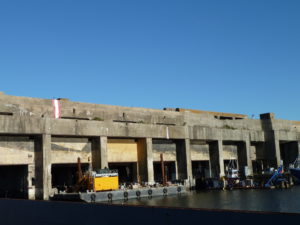
ALSO OF INTEREST - Internationally published features about unknown but vital wartime events, plus the U.S. Naval Institute Naval History Magazine "Author of the Year" feature - GRAY WOLVES DEN. Learn how the masterful construction and U-Boat operation from five indestructible bunker bases in occupied France almost won the war for Germany. Click UNDECLARED WAR to learn that the U.S. Navy - on orders from President Franklin D. Roosevelt - repeatedly ignored the US Neutrality Act months before Pearl Harbor. To save Britain from certain defeat, the Navy hoped that by provoking Nazi Germany, they would initiate high seas war. This feature became a world sensation. "Western Approaches"continues as the last remaining major secret of World War Two, and may be the only such location that made history, yet is virtually unknown to the public and to most historians...but not to the author.

REMEMBER SEPTEMBER 11